Port Authority
A port authority operates ports and other transportation infrastructure for a special-purpose district. Whether operated directly by the government or in cooperation with government agencies, North American port authorities are public entities and are governed by a board or commission. Most port authorities are financially autonomous. Port districts may also operate shipping terminals, airports, railroads, and irrigation facilities. The port authority often owns land, dictates fees, and collects taxes.

Contecon Manzanillo Ready for Ultra Large Container Ships
Contecon Manzanillo S.A. de C.V. (CMSA), International Container Terminal Services…

Bryan Jones Named HDR Marine Terminals Leader
Ports engineer Bryan Jones has been named HDR’s marine terminals leader.Based in Savannah…

Saronic Selects Port of Gulfport for Marauder On-Water Testing
Saronic has expanded its operations to Gulfport, Mississippi, establishing an initial…

Nick Primrose Joins Jones Walker as Special Counsel
Jones Walker LLP welcomed Nick Primrose as special counsel in the Government Relations…

Hybrid Mobile Harbor Crane Commissioned for Port of Gulfport
SSA Marine and the Mississippi State Port Authority at Gulfport (Port of Gulfport)…

Singapore Issues Eight New LNG Bunkering Licenses
Singapore has issued eight new licenses to supply liquefied natural gas as a marine fuel in Singapor

Port of Bilbao Sees Largest YoY Growth Since 2004
In the first half of the year, the Port of Bilbao handled 17,317,427 tons of cargo…

Boluda Corporación Marítima Inaugurates Rotterdam Headquarters
Boluda Corporación Marítima has officially inaugurated its Netherlands headquarters in Rotterdam…

MPA, World Maritime University to Continue Strengthening Maritime Education, Leaders
The Maritime and Port Authority of Singapore (MPA) and World Maritime University…

Echandia to Provide Battery Systems for Two Electric Tugs
Knowledge Marine & Engineering Works has selected Echandia to supply battery systems…

Valenciaport Hackathon Highlights Growing Role of Live Port Innovation
The Port of Valencia is strengthening its position as a proving ground for maritime…

Traffic through Strait of Hormuz Slows After Vessel Attack
Fewer vessels transited the Strait of Hormuz on Friday than earlier this week, hours…
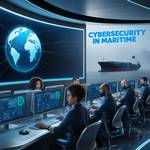
As the maritime industry undergoes a digital transformation, the integration of advanced technologies such as automation, Internet of Things (IoT), and big data is revolutionizing operations. However, this digital shift also brings significant risks, particularly in the realm of cybersecurity. Protecting maritime assets, systems, and data from cyber threats has become a critical priority as the industry becomes more connected and reliant on digital infrastructure.
The Horn of Africa, strategically positioned at the nexus of global trade routes, has long faced the specter of maritime piracy. The waters off Somalia, in particular, have been notorious for piracy incidents that have disrupted international shipping, imperiled seafarers, and prompted multinational military responses. This region's unique combination of socio-economic, political, and geographic factors has engendered a breeding ground for modern piracy, posing complex challenges for the international community
Contracts between vessel owners and charterers concerning the water transportation of goods are technically known in admiralty law as "contracts of affreightment". The charterer agrees to pay a freight charge for cargo space. The voyage, amount of cargo space…
New propulsion systems reduce shipping emissions through several key mechanisms, contributing to lower fuel consumption, increased energy efficiency, and adoption of cleaner energy sources:1. Hybrid Propulsion SystemsHybrid systems combine traditional engines with electric motors and batteries…
Maritime Security is a term which applies to a large variety of technology, devices, and operations both on deck and on shore. It can mean the simple measures used by boat owners and operators to protect individuals, vessels, and cargo from theft, sabotage, or piracy.