
Marine Link
Tuesday, January 13, 2026

Shipbuilding / Vessel Construction

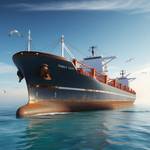
Shipbuilding is the construction of ships, which takes place in a specialized facility known as a shipyard. Shipbuilders, also called shipwrights, are workers which specialize in vessel construction and repair. The construction of boats is called boat building. Due to the smaller size and scope of the vessels being produced, boats do not necessarily require the full services of a shipyard but may be built in a boatyard or even smaller private facility.

Block construction is a modern shipbuilding method which involves the assembly of prefabricated sections. Cross-sections of the superstructure are pre-built in a shipyard, taken to the building dock (or slipway,) and then hoisted into position and attached. Some of the more equipped shipyards are able to build equipment and utilities into the blocks, pre-installing pipes, plumbing, and electrical cables. The more components that can be built into the blocks before final assembly, the less effort required once the hull is welded together.

Since the 40s, modern ships have been made of welded steel. The first ships produced by this method had problems with inadequate fracture toughness, which let to rare but devastating structural cracks. The development of specialized steel in the 50s has largely eliminated the problem of brittle fracture, although there are still instances due to the unregulated use of grade A and B steel. This problem seems to result when steel with unknown toughness or FATT (fracture appearance transition temperature) is used in side shells. Despite these occasional incidents, most problems with brittle fractures seem to have been eliminated my modern methods and regulation.

Depending on design and materials, vessels reach a point in their lifespan where refitting and repair become impractical or impossible. The demolition of ships is called ship breaking- a process designed to allow materials and components to be reused and recycled. Equipment can often be reused in other ships, and metals (particularly steel) are separated for scrap recycling, with the hulls being discarded in ship graveyards.

Tags: shipbuilding Vessel Construction

© ASENAV

ASENAV, SAAM to Build Tugboat in Chile

In a strategic step to consolidate the country's industrial and export capacity,…

Wind-Assisted LNG Carrier Concept Gets BV AiP

Dalian Shipbuilding Industry Co., Ltd. (DSIC) unveiled a new generation of decarbonization…

(Credit: Union Maritime)

Union Maritime Takes Delivery of LNG and Wind-Powered LR2 Tanker

Union Maritime has taken delivery of what it said is the world’s first long-range…

Image courtesy Magnet Defense

Magnet Defense Acquires Metal Shark

The face of U.S. shipbuilding continues to evolve at speed, as Magnet Defense LLC…

The NavalLinks Supplylink ATB brings together technologies readily designed and constructed in U.S. Jones Act markets and shipyards to maximize the efficiency and storage of material. The barge as a floating resupply base is capable of storing up to 8.4 million gallons of fuel and 120 TEUs.
Image courtesy Navallink

U.S. Shipbuilding: Tactical Strategy or Ready to Cut Steel in 2026?

Maritime 2026 opened with a bang between the announcement of Battleships, Venezuela…

(Credit: Gladding-Hearn Shipbuilding)

Gladding-Hearn Delivers High-Speed Pilot Boat to Maryland Pilots

The Association of Maryland Pilots has taken delivery of a new Baltimore Class pilot…

Source: HHI-EMD

HHI-EMD Runs Four-Stroke on Ethanol at Full Load

HD Hyundai Heavy Industries, Engine & Machinery (HHI-EMD) has successfully verified…

Copyright Alex/AdobeStock

Shipbuilding: DHT Accepts New VLCC

DHT Holdings, Inc. has taken delivery of a VLCC newbuilding from Hanwha Ocean Co., Ltd.

HII’s Ingalls Shipbuilding division delivered the Arleigh Burke-class guided missile destroyer Ted Stevens (DDG 128) to the U.S. Navy on December 29, 2025. Pictured from left to right are Prospective Commanding Officer for Ted Stevens (DDG 128) Capt. Mary Katey Hays, Ingalls Shipbuilding’s DDG Program Manager Lauren Daniel and SUPSHIP Gulf Coast’s DDG-51 Program Manager Representative Cmdr. Roxane Powers. Image courtesy HII

HII Delivers Destroyer Ted Stevens (DDG 128) to U.S. Navy

HII’s Ingalls Shipbuilding division has delivered Arleigh Burke-class guided missile…

Last month Secretary of Homeland Security Kristi Noem, Canada’s Ambassador to the U.S. Kirsten Hillman and Finland Minister of Economic Affairs Sakari Puisto reaffirm their countries’ commitment by signing the Icebreaker Collaboration Effort (ICE) Pact at U.S. Coast Guard Headquarters in Washington, D.C., on Nov. 18, 2025.  U.S. Coast Guard photo by Petty Officer 2nd Class Gabriel Wisdom

USCG Awards Icebreaker Vessel Construction Contracts

The U.S. Coast Guard announced the award of two contracts to build up to six Arctic…

Copyright Ninel/AdobeStock

Shipbuilding a Bright Spot for German Industry in 2026

A majority of German business associations expect job cuts in 2026 as the country's…

Image courtesy d’Amico International Shipping S.A.

d’AMICO Orders Pair of Eco Design Vessels

Product tankers shipowner d’Amico International Shipping S.A. said its operating…

Related Articles

Role of Private Security Companies in Combating Maritime Piracy

Private Security Companies (PSCs) play a crucial role in combating maritime piracy, especially in high-risk areas such as the Gulf of Aden, the Indian Ocean, and parts of the West African coast. The increase in piracy, particularly in the early 2000s, led to a higher demand for specialized security services.

Charting a New Course: The Future of the Maritime Workforce in a Digital, Green Era

The global maritime industry is on the cusp of a profound transformation, driven by rapid decarbonization, advanced digitalization, and an increasingly complex regulatory landscape. This article explores how these forces are reshaping the skills, roles, and welfare needs of the maritime workforce. From the demand for "green" engineering expertise to the rise of remote operations and AI-driven systems, we delve into the challenges and opportunities in attracting, training, and retaining the talent essential for sustainable and efficient shipping. The future maritime professional will be a highly adaptable, digitally fluent, and environmentally conscious individual, operating within an industry that must prioritize human-centric approaches to truly thrive.

Next-Gen Naval Power: Innovations Reshaping Modern Fleets

Naval forces globally are undergoing a profound transformation, driven by an accelerating pace of technological innovation and evolving geopolitical landscapes. This article explores the cutting-edge advancements that are redefining maritime defense and offense. From the integration of artificial intelligence and unmanned systems to the development of directed energy weapons and advanced stealth capabilities, we delve into how these innovations are enhancing situational awareness, extending operational reach, and enabling new forms of naval warfare. The future fleet will be characterized by networked, intelligent, and highly adaptable platforms, operating across multiple domains to secure sea lanes and project power more effectively than ever before.

Ship Electronics

Electronic devices classed for use in the marine environment. All electronics used onboard must be designed to fit in the small confines of a bridge and can come in contact with salt water, so they are made to be very water resistant or waterproof.

Tanker Vessels are vital links in the global supply chain

Tanker ships are an important component of the maritime sector, and they transport liquid cargoes around the world. These vessels are vital to the supply chain for energy, chemicals and other essential commodities. There are many types of tankers, each designed for specific cargoes such as oil, LNG, chemicals, or other liquids.

Subscribe for
Maritime Reporter E-News

Maritime Reporter E-News is the maritime industry's largest circulation and most authoritative ENews Service, delivered to your Email five times per week