

How Does the Public Really Feel about Small Modular Reactors?

In a spare few minutes I took a quick look at the U.S. Center for Maritime Innovation Report: Small Modular Reactor Technologies for Maritime Applications of May 19, 2026.As near as I can figure, it focuses on two major concerns with regard to the use of SMRs in commercial ships:1. Insurance obstacles and2. Possible adverse reactions by the public to nuclear commercial ships.That is weird to me, since my major concern would be that it is taking way too long to simply build a commercial ship with an SMR as its power source.
Liberty Global Logistics, Hyundai Glovis Study Nuclear-Powered PCTCs

Liberty Global Logistics (LGL) and Hyundai Glovis signed an Memorandum of Understanding (MoU) to evaluate the feasibility of developing and operating a small modular reactor (SMR)-powered Pure Car and Truck Carrier (PCTC), initially targeting service between the United States and South Korea.The MoU moves the nuclear-powered ship project beyond conceptual design toward examining the regulatory, infrastructure, technical and commercial hurdles required for actual operation. LGL will evaluate the U.S.
ABS Study Weighs Costs of Nuclear-Powered LNG Shipping

A nuclear-powered liquefied natural gas (LNG) carrier could cost about 2.5 times as much to build as a conventional vessel but substantially reduce fuel costs over its operating life, according to a joint study involving ABS, Blossom Energy and a global shipping company.Presented at Gastech 2026, the study assessed a 174,000-cubic-metre LNG carrier equipped with a 20-25 MWe high-temperature gas-cooled reactor being developed by Blossom Energy.The study compared the vessel's arrangement…
SERF’s UP: Could More Expensive Sustainable Fuels = a Cheaper, Faster Transition?

SNAME’s M-50 Sustainable Fuels Technology and Research panel has given itself the task to try to figure out if there actually is a preferred sustainable fuel out there.This is a massive rabbit hole effort that does not fixate on the state of the art, but instead is making an attempt to engage all engineering tools, experience, and insight to predict the optimal future.SNAME’s assumption focuses on identifying the optimal fuel that will be universally (or at least near universally) used when direct electric (a connection to the electric distribution net or batteries) cannot work.
MARAD, CORE POWER to Explore Nuclear-Powered Shipping Technologies

The U.S. Department of Transportation's Maritime Administration (MARAD) and CORE POWER (US) Inc. signed an agreement to accelerate the commercial, industrial, and regulatory pathways for U.S.-flagged nuclear-powered commercial ships. Fueled by small modular reactor (SMR) technology, this first-of-its-kind partnership will advance the President's agenda to strengthen American shipping and secure energy dominance.Under the Memorandum of Cooperation, MARAD and CORE POWER will establish a collaborative framework to navigate SMR regulatory acceptance…
MarAd Inks Pact to Move on Maritime Nuclear Power

The U.S. Department of Transportation's Maritime Administration (MARAD) and CORE POWER (US) Inc. signed an agreement to accelerate the commercial, industrial, and regulatory pathways for U.S.-flagged nuclear-powered commercial ships. Fueled by small modular reactor (SMR) technology, this first-of-its-kind partnership will advance the President Trump's agenda to strengthen American shipping and secure energy dominance."President Trump has made it clear that American energy dominance and maritime strength go hand in hand," said Maritime Administrator Stephen M. Carmel.
Transportation Secretary, Port of Corpus Christi to Explore Nuclear Maritime Technologies

U.S. Secretary of Transportation Sean P. Duffy was joined by Maritime Administrator (MARAD) Stephen M. Carmel, U.S. Representative Michael Cloud (TX-27) and leaders from Texas’ Port of Corpus Christi to kick off a new partnership focused on small modular reactor (SMR) technology for maritime applications. By testing the latest innovations in SMRs, the Department can help revitalize U.S. shipbuilding, cut fuel costs, and restore America’s maritime dominance.This is the second agreement the Department has signed since Secretary Duffy launched the SMR initiative in May.
Nuclear-Powered 15K TEU Containership Receives ABS AIP

ABS has awarded approval in principle (AIP) for a concept design for a nuclear-powered 15,000 TEU containership developed in collaboration with the Korea Research Institute of Ships and Ocean Engineering (KRISO) and the Korea Atomic Energy Research Institute (KAERI).Equipped with a small modular reactor (SMR), the concept is part of an ongoing joint development project with ABS, KRISO and KAERI to evaluate the technical feasibility of nuclear-powered commercial shipping. The vessel…
How the U.S. Coast Guard is Shaping the Future of Maritime Nuclear Power

Looking back at history one could argue that it was French author Jules Verne in his book “20,000 Leagues Under the Sea”, published in 1869, who was speculating about a new power source much in the same out of the box thinking that H.G. Wells employed when he wrote about inter-planetary flight in “War of the World’s. Verne was writing about “electricity” from batteries using seawater which he created after studying the model of the newly developed French Navy submarine “Plongeur” at the Exposition of 1867.In the novel…
Rotterdam Study Outlines Port Calls for Nuclear-Powered Commercial Vessels

A new joint study using the Port of Rotterdam as a case study “Enabling Nuclear-Powered Feeder Ships: A Joint Development Project on Port Call Feasibility and Regulatory Pathways” has found that existing port safety and risk-management frameworks could provide a credible starting point for assessing nuclear-powered commercial ship calls within a major European port environment.The desktop study, carried out through a joint development project involving Lloyd’s Register, the Port of Rotterdam Authority, CORE POWER and A.P.
ABS Grants AiP for Nuclear Reactor Integration in Vessel Design

ABS issued approval in principle (AIP) for the integration of a nuclear reactor into a cargo vessel propulsion system developed by the Massachusetts Institute of Technology (MIT), HD Korea Shipbuilding & Offshore Engineering (HD KSOE) and Capital Maritime Group.This design uses a special synthetic fluid to carry heat from the reactor core. Today’s designs typically focus on micro-scale thermal outputs of 10 to 20 megawatts. The MIT design’s near-atmospheric operating pressure can allow for thinner…
ABS Releases Nuclear-Ready Notation for Marine, Offshore Assets

ABS announced the release of the ABS Nuclear-Ready Notation, an industry first classification notation for marine and offshore assets designed to support future conversion to nuclear energy.The notation is featured in the latest ABS document, the Guide for Nuclear Ready Applications for Marine and Offshore.The notation offers a practical mechanism to help with preserving long-term flexibility, reducing the risk of major redesign later in an asset's life cycle, and demonstrating that future nuclear conversion has been addressed in accordance with ABS requirements.
Op-Ed: Bringing Nuclear Propulsion to Commercial Reality

With demonstration projects now underway, including a nuclear-powered LNG tanker and an offshore vessel, the debate is shifting from whether nuclear shipping is possible to how it can be delivered. Jan Emblemsvåg, Professor at the Norwegian University of Science & Technology (NTNU)'s Department of Ocean Operations and Civil Engineering in Ålesund, argues that the key barriers are no longer technical, but regulatory, commercial and political.Nuclear propulsion is returning to the…
At the Helm: How the U.S. Coast Guard is Shaping the Future of Maritime Nuclear Power

Introduction. Looking back at history one could argue that it was French author Jules Verne in his book “20,000 Leagues Under the Sea”, published in 1869, who was speculating about a new power source much in the same out of the box thinking that H.G. Wells employed when he wrote about inter-planetary flight in “War of the World’s. Verne was writing about “electricity” from batteries using seawater which he created after studying the model of the newly developed French Navy submarine “Plongeur” at the Exposition of 1867.In the novel…
Molten Salt Technology Validated

Copenhagen Atomics has successfully completed two years of continuous operation of a molten salt pump and test loop at its facilities in Copenhagen. The system has been running without issues under high-temperature molten salt conditions, marking one of the longest continuous durability tests of its kind worldwide.Molten salt reactors rely on pumps to circulate liquid fuel or coolant at temperatures exceeding 600 °C for years at a time. Demonstrating long-term, stable pump operation…
UK-Led Maritime Consortium Unveils Plan for Nuclear-Powered Shipping

A U.K.-led maritime consortium has set out plans to develop international standards for nuclear-powered commercial ships, as Britain seeks a leading role in efforts to decarbonize global shipping.The Maritime Nuclear Consortium, convened by Lloyd’s Register, brings together companies from the nuclear, maritime, insurance and regulatory sectors to address safety, security, regulation and commercial viability for nuclear-powered vessels.The consortium’s core members include Lloyd’s Register…
Industry Partners Showcase Next-Gen Nuclear Reactor for Maritime Decarbonization
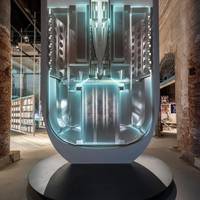
Fincantieri, newcleo and Pininfarina have unveiled the look of the next-generation sustainable nuclear generator for maritime applications.The look of newcleo’s fourth-generation lead-cooled fast reactor has been revelated at International Architecture Exhibition of the Venice Biennale.Combining technological vision, industrial expertise, and cutting-edge design, the three companies have collaborated to redefine the image of nuclear energy. Visitors are invited reimagine their…
Study: Allseas SMR Tech Seen as Key Maritime, Industry Decarbonization Tool
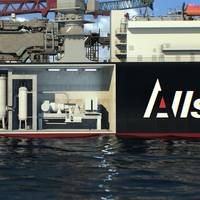
Allseas’ small modular reactor (SMR) technology could generate up to $150 million billion in economic value for the Netherlands and create as many as 40,000 new jobs by 2050, according to an impact study released on Monday by the offshore engineering group.The study, conducted by consultancy Roland Berger, found that deploying the company’s 25 MWe / 70 MWt high-temperature gas-cooled SMR could also help cut grid congestion, strengthen energy security and deliver major emissions…
Maritime’s Search for the Holy Grail of Alternative Energy
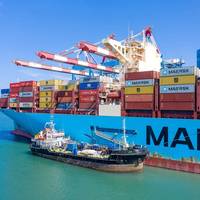
The maritime industry has worked with a single fuel source for over a century and with the rush to meet emission standards in both domestic and foreign markets, adapting to the current list of alternative fuels is going to present significant problems. Each market has its issues whether bluewater, brownwater, coastal, foreign or domestic.Chose any of the larger global shipbuilding yards and the basic bluewater ship design will include a large two stroke combustion engine.To remove…
US Suspends Licenses to Ship Nuclear Plant Components to China

The U.S. in recent days suspended licenses for nuclear equipment suppliers to sell to China's power plants, according to four people familiar with the matter, as the two countries engage in a damaging trade war.The suspensions were issued by the U.S. Department of Commerce, the people said, and affect export licenses for parts and equipment used with nuclear power plants.Nuclear equipment suppliers are among a wide range of companies whose sales have been restricted over the past two weeks as the U.S.-China trade war shifted from negotiating tariffs to throttling each other's supply chains.
Allseas Takes Aim at Nuclear Power for Energy-Intensive Vessels
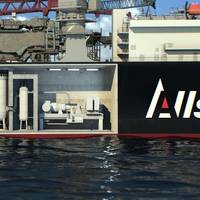
Dutch offshore contractor Allseas has launched a five-year plan to design, develop and deploy a Small modular reactor (SMR) tailored for integration into offshore vessels and for onshore use.Building on 40 years of engineering expertise in the offshore energy industry, Allseas move into nuclear marks the next bold step aimed at delivering clean, high-performance energy systems to sea and shore.Allseas has selected High-temperature gas-cooled reactors (HTGRs) in the 25 MWe range, due to their inherently safe characteristics.
Philly Shipyard Unable to Build Nuclear Submarine Despite Trump Green Light
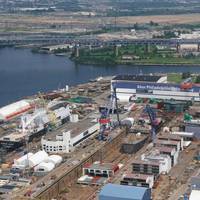
The South Korean-owned Philly Shipyard in the United States does not currently have the capability to build a nuclear-powered submarine, Prime Minister Kim Min-seok said on Thursday during a parliamentary hearing.His remarks come after U.S. President Donald Trump wrote on social media last week that he had given approval for South Korea to build a nuclear-powered submarine and that it would be built in the Philadelphia shipyard.Trump posted the comment on his Truth Social platform after South Korea's President Lee Jae Myung asked him during a summit to let his country…
ABB, Blykalla Join Forces for Nuclear Power Tech for Maritime Industry
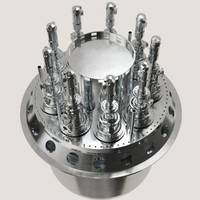
ABB has signed a memorandum of understanding (MoU) with Swedish nuclear energy company Blykalla to support and accelerate the deployment of small modular lead-cooled reactors to the maritime industry.Building on the terms of an existing MoU between Blykalla and ABB signed in October 2024, which targets developing lead-cooled SMR technology to support Sweden’s clean energy requirements, the agreement expands the partnership and aligns with growing momentum for nuclear energy as a marine power source.Blykalla’s Swedish Advanced Lead Reactor (SEALER) is a highly compact…


